 SIGN IN
Listen To Your Body. Don't Fight It.
The ATTIKA Way

One of the most common things we hear as coaches is that someone is frustrated with their body.
They're frustrated because they're tired.
Frustrated because they're sore.
Frustrated because they're sick.
Frustrated because they're not lifting as much as they were a few weeks ago.
It's understandable. We all want our body to cooperate with our plans.
The problem is that many of us have been taught to see these moments as our body working against us, when in reality they are often our body trying to communicate with us.
Your Body Is Constantly Giving You Information
Your body is talking to you all day long.
Yes, being sick, tired, sore, it´s not fun for anyone.
But they are not there to make your life difficult.
They´re actually there to make your body's life easier.
Hunger lets you know when you need food.
Fatigue lets you know you need rest.
Pain, discomfort, tension, or reduced performance... something is wrong.
When you're exhausted after several poor nights of sleep, your body isn't being lazy. It's asking for recovery.
When you're feeling stressed and overwhelmed, your body isn't trying to sabotage your productivity. It's letting you know that your current demands may be exceeding your current resources.
When you're sick, your body isn't failing. Your immune system is working overtime to help you recover.
The challenge is that we've become very good at ignoring these messages.
We override tiredness with coffee. We distract ourselves when we're stressed. We push through soreness because we're worried that taking a step back means we're losing progress.
Often, we answer our body's request with the exact opposite of what it was asking for.
Fighting Your Body Is a Battle You Won't Win
At first, it can feel like ignoring your body works.
You can stay up late and get through the next day.
You can train hard despite feeling run down.
You can keep pushing through stress and tell yourself you'll deal with it later.
But eventually, the body always gets the final say.
Ignore fatigue long enough, and you'll be forced to rest.
Ignore stress long enough, and it will begin to affect your sleep, recovery, mood, or performance.
Ignore pain long enough, and a small issue can become a much bigger one.
The body is remarkably adaptable, but it isn't infinitely patient.
That's why listening early is often far easier than dealing with the consequences later.
Listening Doesn't Mean Doing Nothing
This is where people often get confused.
Listening to your body does not mean avoiding challenges or opting out whenever something feels difficult.
At ATTIKA, we're big believers in resilience, and sometimes your body needs encouragement to do hard things.
The key is learning the difference between discomfort and a genuine signal that something needs attention.
Listening to your body means responding appropriately to the information it's giving you.
If you're feeling unusually tired, maybe today isn't the day to chase a personal best. Perhaps it's a day to move, focus on technique, and leave feeling better than when you arrived.
If you're extremely sore, maybe your coach adjusts the session so you can continue training while supporting recovery.
If a movement causes pain, forcing yourself through it isn't a badge of honour. It may be an opportunity to explore why it hurts and find a better way forward.
If you're under a lot of stress, perhaps the goal of the session shifts. Instead of trying to break records, the session becomes an opportunity to regulate your nervous system, move your body, and create some space in your day.
You're still training.
You're still progressing.
You're simply responding to the body you have today.
The More You Listen, The More You Learn
One of the most interesting things about health and fitness is that nobody can listen to your body for you.
A coach can guide you.
A physio can help you.
A doctor can give advice.
But ultimately, you are the one living inside your body every day.
The more attention you pay, the more patterns you begin to notice.
You learn what good fatigue feels like versus exhaustion.
You learn the difference between muscle soreness and pain.
You learn what helps you recover, sleep better, manage stress, and perform at your best.
These lessons don't appear overnight. They come from years of paying attention.
The people who stay healthy and active for decades aren't usually the ones who are best at ignoring their bodies.
They're often the ones who have become excellent at listening to it.
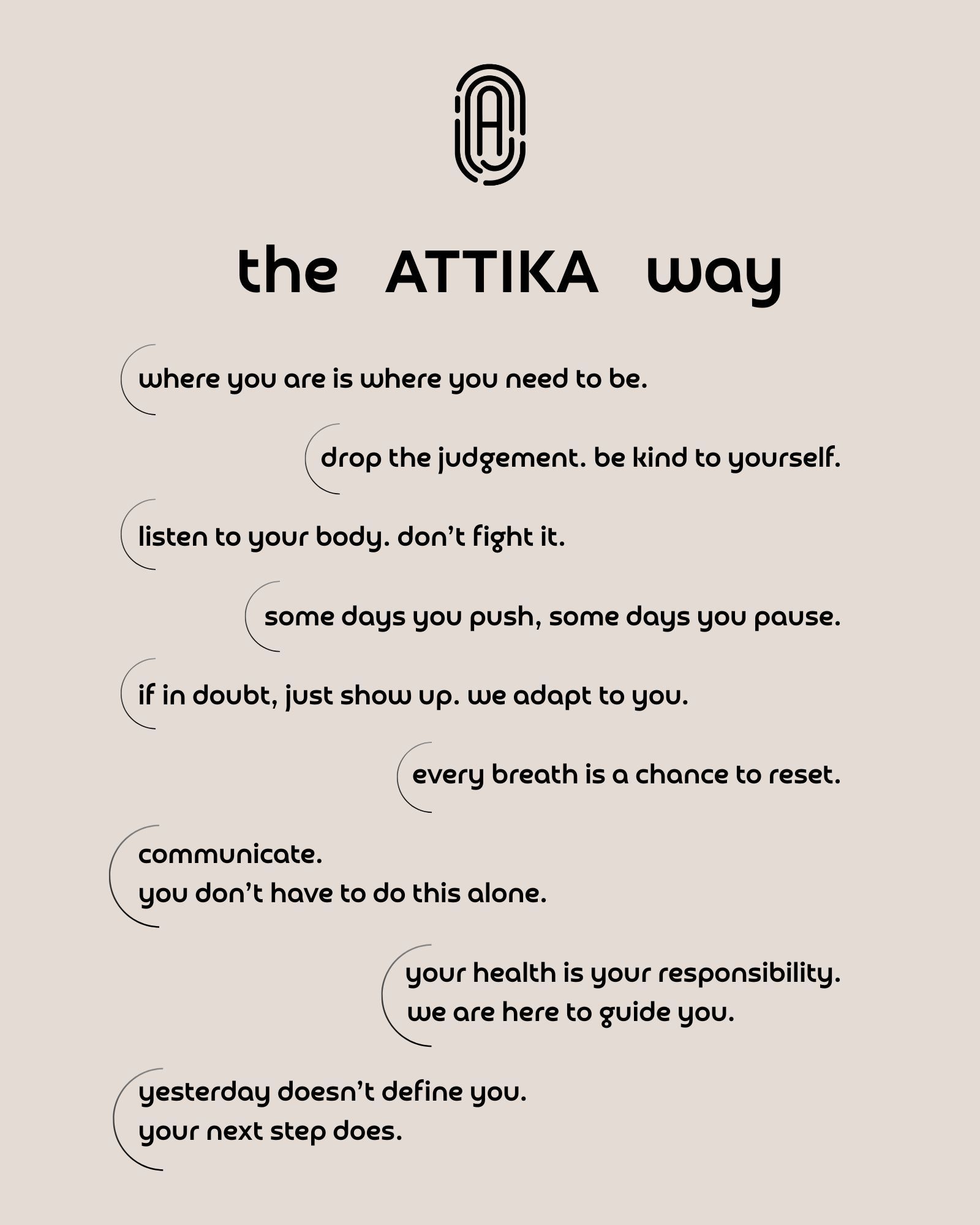
¨Listen to your body. Don´t fight it¨ is part of the ATTIKA Way.
The ATTIKA Way is a list of reminders of how we approach health in a healthy way.
With more kindness, less pressure, and a focus on building habits that actually last.
One of the most common things we hear as coaches is that someone is frustrated with their body.
They're frustrated because they're tired.
Frustrated because they're sore.
Frustrated because they're sick.
Frustrated because they're not lifting as much as they were a few weeks ago.
It's understandable. We all want our body to cooperate with our plans.
The problem is that many of us have been taught to see these moments as our body working against us, when in reality they are often our body trying to communicate with us.
Your Body Is Constantly Giving You Information
Your body is talking to you all day long.
Yes, being sick, tired, sore, it´s not fun for anyone.
But they are not there to make your life difficult.
They´re actually there to make your body's life easier.
Hunger lets you know when you need food.
Fatigue lets you know you need rest.
Pain, discomfort, tension, or reduced performance... something is wrong.
When you're exhausted after several poor nights of sleep, your body isn't being lazy. It's asking for recovery.
When you're feeling stressed and overwhelmed, your body isn't trying to sabotage your productivity. It's letting you know that your current demands may be exceeding your current resources.
When you're sick, your body isn't failing. Your immune system is working overtime to help you recover.
The challenge is that we've become very good at ignoring these messages.
We override tiredness with coffee. We distract ourselves when we're stressed. We push through soreness because we're worried that taking a step back means we're losing progress.
Often, we answer our body's request with the exact opposite of what it was asking for.
Fighting Your Body Is a Battle You Won't Win
At first, it can feel like ignoring your body works.
You can stay up late and get through the next day.
You can train hard despite feeling run down.
You can keep pushing through stress and tell yourself you'll deal with it later.
But eventually, the body always gets the final say.
Ignore fatigue long enough, and you'll be forced to rest.
Ignore stress long enough, and it will begin to affect your sleep, recovery, mood, or performance.
Ignore pain long enough, and a small issue can become a much bigger one.
The body is remarkably adaptable, but it isn't infinitely patient.
That's why listening early is often far easier than dealing with the consequences later.
Listening Doesn't Mean Doing Nothing
This is where people often get confused.
Listening to your body does not mean avoiding challenges or opting out whenever something feels difficult.
At ATTIKA, we're big believers in resilience, and sometimes your body needs encouragement to do hard things.
The key is learning the difference between discomfort and a genuine signal that something needs attention.
Listening to your body means responding appropriately to the information it's giving you.
If you're feeling unusually tired, maybe today isn't the day to chase a personal best. Perhaps it's a day to move, focus on technique, and leave feeling better than when you arrived.
If you're extremely sore, maybe your coach adjusts the session so you can continue training while supporting recovery.
If a movement causes pain, forcing yourself through it isn't a badge of honour. It may be an opportunity to explore why it hurts and find a better way forward.
If you're under a lot of stress, perhaps the goal of the session shifts. Instead of trying to break records, the session becomes an opportunity to regulate your nervous system, move your body, and create some space in your day.
You're still training.
You're still progressing.
You're simply responding to the body you have today.
The More You Listen, The More You Learn
One of the most interesting things about health and fitness is that nobody can listen to your body for you.
A coach can guide you.
A physio can help you.
A doctor can give advice.
But ultimately, you are the one living inside your body every day.
The more attention you pay, the more patterns you begin to notice.
You learn what good fatigue feels like versus exhaustion.
You learn the difference between muscle soreness and pain.
You learn what helps you recover, sleep better, manage stress, and perform at your best.
These lessons don't appear overnight. They come from years of paying attention.
The people who stay healthy and active for decades aren't usually the ones who are best at ignoring their bodies.
They're often the ones who have become excellent at listening to it.
¨Listen to your body. Don´t fight it¨ is part of the ATTIKA Way.
The ATTIKA Way is a list of reminders of how we approach health in a healthy way.
With more kindness, less pressure, and a focus on building habits that actually last.
